Statistics and analysis of the bike rental market in France - 2025 review and 2026 outlook
-large.jpg)
This page is a complete guide to the French bike rental market (2025–2026 edition).
Our goal: to understand what really makes the sector tick - the dynamics of cycling in France, the weight of cycle tourism, the impact of falling new bike sales, and the rise of “access rather than ownership” models (short-term rental, long-term rental/leasing, bike sharing, peer-to-peer rental).
In it, we detail:
- the key figures of bike rental in France,
- the map of the supply side (all the players and their business models),
- demand and usage,
- trends and outlook for 2026,
All data is sourced (public and professional bodies) and the full list is provided at the bottom of the page, in the Sources section.
Overall analysis of the bike rental market & key figures
Key figures for the sector
Depending on who you ask, the bike market can sometimes seem contradictory. Don't worry, let's look at the numbers.
Falling bike sales...
€3.2bn
Cycle market turnover
2024 figure (France), down 5.9% vs 2023
1,956,700
bikes sold
Bikes sold in 2024 (France), i.e. -12% vs 2023.
For several years, the trend has been clear: when people already own a bike, they are more interested in extending its life than in buying a new one. Repair, maintenance, refurbishment… cycling is fully part of the circular economy.
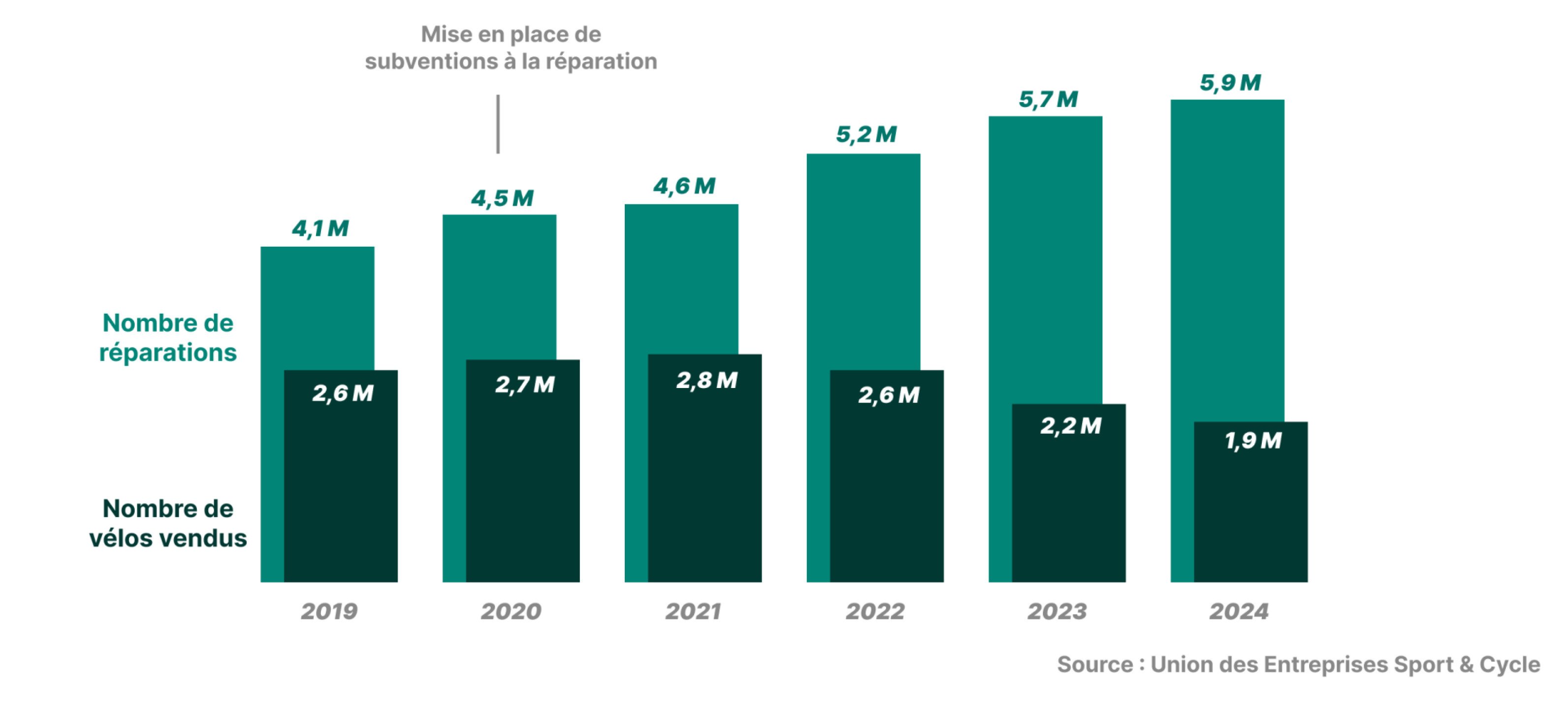
Conversely, when people don't own one or only need one occasionally, rental is becoming the flexible, rational solution. This shift towards a usage-based economy is encouraged by public schemes rolled out since 2020 (such as repair subsidies and national cycling plans), which support both the refurbishment of existing bikes and easier access to active mobility.
... in contrast with rising use
+9%
Increase in cycling traffic
In the first half of 2025
9 million
cycling trips/year
Stated goal: to become world number one by 2030.
9,120
Accueil Vélo businesses
Accommodation providers, rental companies, repairers, restaurants, tourist offices, visitor sites and leisure activities located along cycle routes.
4 days/year
of rental on average per person
On BikUp, the average rental length is 3.7 days per rental.

What we call the “rental market”
Bike rental in France covers several sub-markets, each driven by a different logic:
Short-term rental (STR)
The core business of professional bike rental companies. For a few hours to a few days (tourism, events, ...).
Medium-term rental
from a few weeks to a few months (seasonal work, students, mobility).
Long-term rental (LTR) / leasing
3 to 36 months, often for e-bikes and premium bikes.
Bike sharing schemes
urban use, docking stations/free-floating, pricing per minute/day/subscription.
Peer-to-peer rental (P2P)
This is where BikUp fits in. A distributed offer with a strong local focus, trust & insurance.
Package deals (tour operators)
trip + bike + services (luggage, assistance, accommodation).
Supply: rental players & models
The French rental market relies on several complementary models. Each player meets a specific need: daily mobility, tourism, leisure, try-before-you-buy or long-term subscription.
Independent professional rental companies
Based in tourist areas and along cycle routes, they form the core of the short-term rental market. Their value lies in the quality of service: a suitable fleet (e-bikes, hybrids), accessories, assistance, advice and local partnerships.
However, their business is highly seasonal and fleet costs are high.
2,900
professional bike
rental companies
Peer-to-peer rental
Matchmaking platforms such as BikUp put unused bikes to work. They broaden the supply, particularly in medium-sized towns and areas poorly covered by professional rental companies.
Success depends on trust (insurance, quality, support). This model brings flexibility and diversity, but requires good management of quality standards.
17,000
bikes rented out peer-to-peer
in France
Bike sharing schemes
Bike sharing systems structure urban mobility. Their goal is simple: to enable short, fast, multimodal journeys. The model relies on subscriptions and pay-per-use pricing.
| Service | City | Operator | Number of bikes |
|---|---|---|---|
| Vélo’V | Lyon | JCDecaux | 5,000 |
| Le Vélo | Marseille | Fifteen | 2,000 |
| Bicloo | Nantes | JCDecaux | 1,230 |
| STAR | Rennes | Keolis | 650 |
| Vélib’ | Paris | Smovengo | 19,000 |
| VélôToulouse | Toulouse | JCDecaux | 3,300 |
| DiviaVélodi | Dijon | Keolis | 462 |
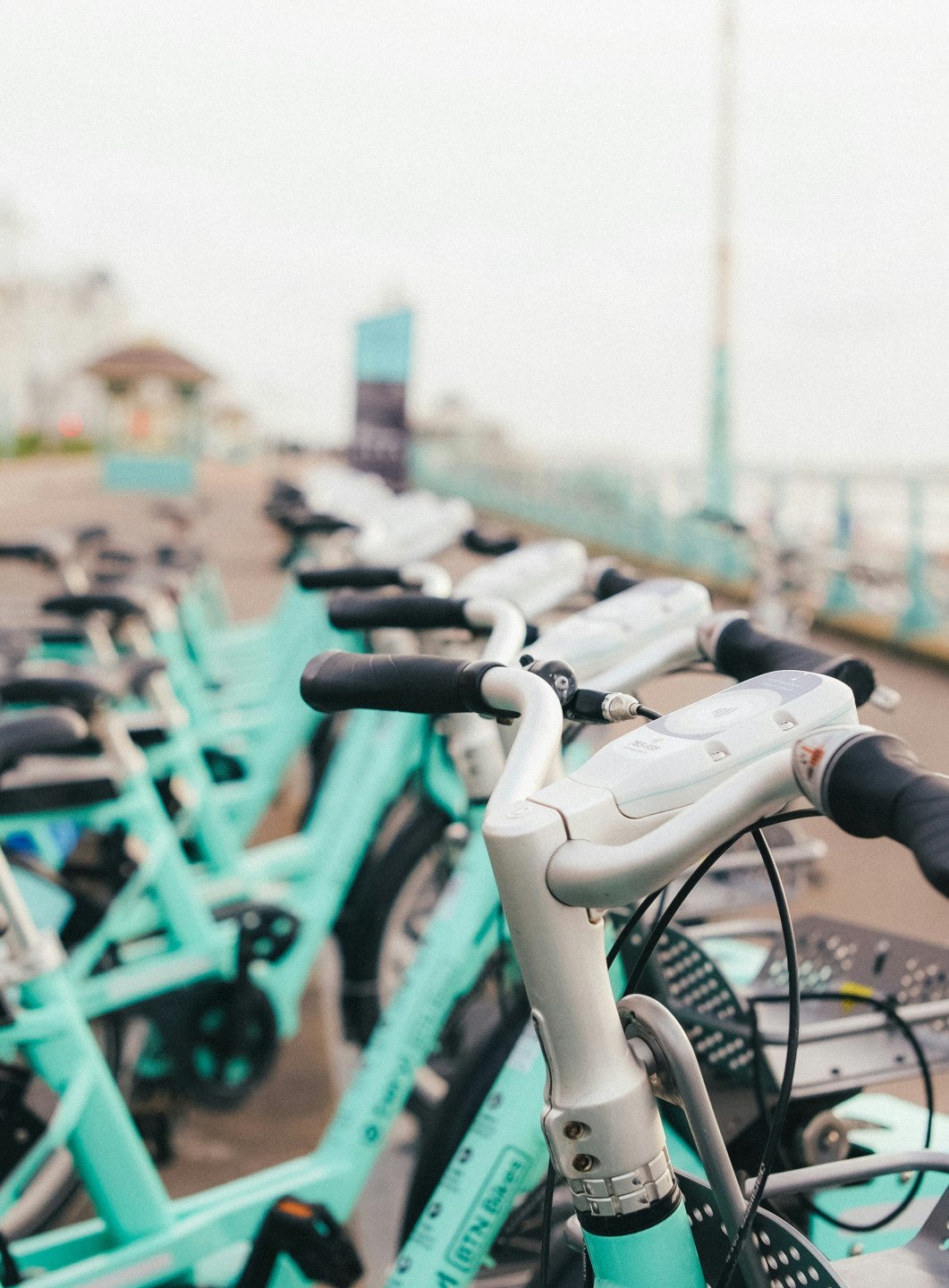
They have firmly established the idea that you can use a bike without owning one. However, their offer remains standardised and poorly suited to leisure use or touring.
Long-term rental (LTR) and leasing
Paying for a bike monthly, particularly e-bikes and cargo bikes, addresses the financial barrier to buying. Maintenance and insurance are often included.
This model appeals to bike commuters and businesses. It turns the bike into a recurring service rather than a one-off purchase.
Non-specialist rental providers
Many businesses offer rental without it being their core activity: bike shops, campsites, holiday cottages or hotels. For them, it's an additional service designed to enhance the customer experience or generate extra income.
Even with limited fleets, they play an important role, especially in rural or tourist areas poorly covered by specialist rental companies, thereby helping to broaden access to rental across the country.
472,000
bikes rented through
non-specialist providers
Demand study: consumer habits & personas
The main drivers of demand in France
Cycle tourism with strong national visibility
- 9 million cycling trips/year in France.
- €4.6bn in reported direct economic benefits.
- A growing infrastructure network: 26,100 km of cycle routes & greenways.
Consequence: rental demand is closely linked to routes, holiday periods, and services (luggage, assistance, e-bikes).
Recent increase in cycling (2025–2026)
- +9% in traffic for Jan–May 2025 vs 2024.
- National bulletins detail the differences between weekdays/weekends and by type of area.
Consequence: “leisure weekend” rental (hybrids/e-bikes) is very sensitive to long weekends, public holidays, and the weather.
Uneven cycling quality from city to city
- 334,000 responses to the 2025 Baromètre vélo (a record): conditions are improving, but unevenly.
Consequence: rental grows faster where:
- infrastructure exists,
- the feeling of safety is improving,
- the local ecosystem (rental companies/repairers/tourism) is already in place.

Trends and outlook for 2026
Consume better
buy less
Use before ownership
The decline of the new bike market in 2024 (lower turnover and volumes) supports the idea that people:
- postpone purchases,
- favour second-hand,
- or switch to rental/LTR.
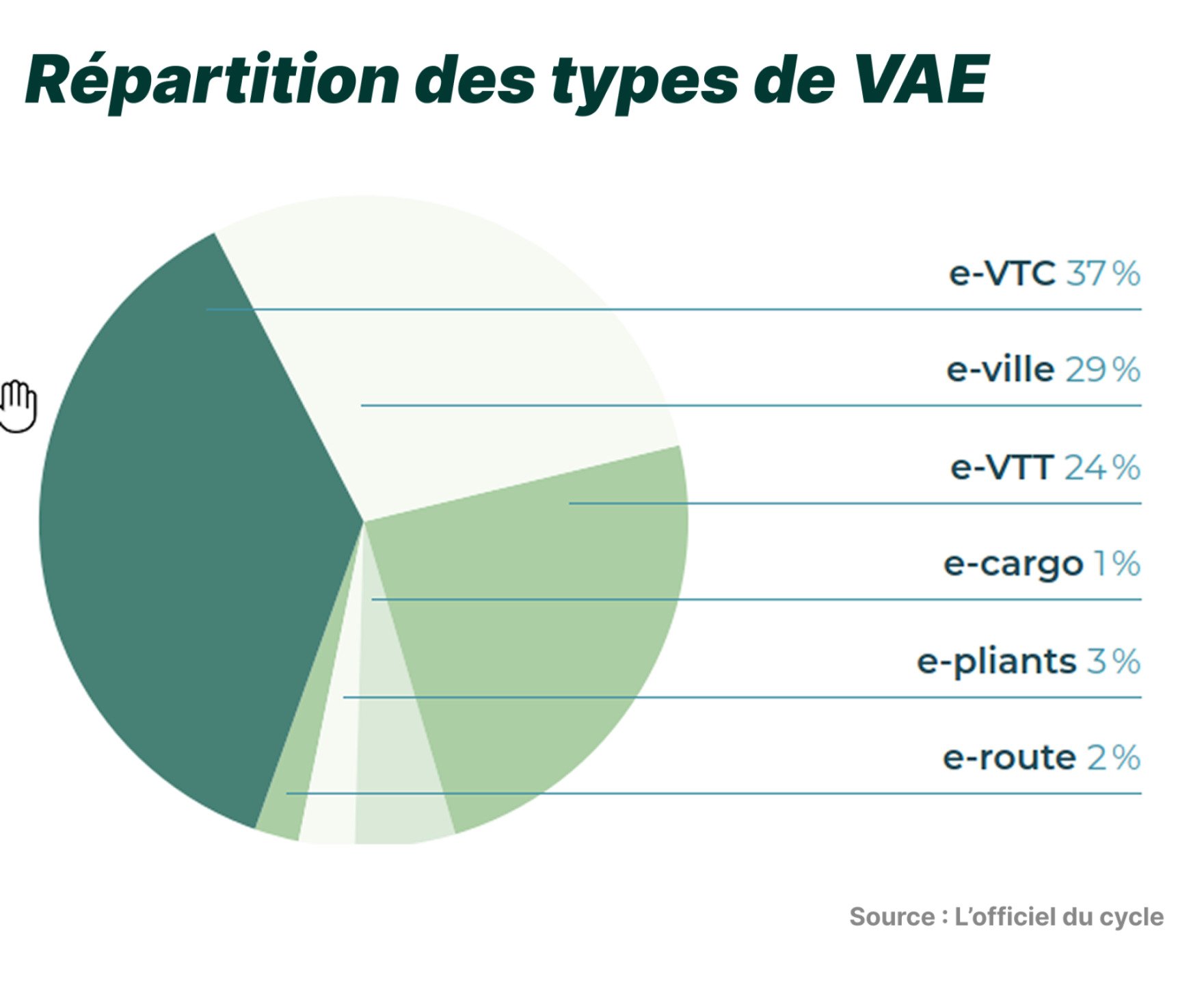
E-bikes drive usage (and therefore rental)
Even if not all “2025” e-bike figures are public, the trend is clearly driven by:
- the democratisation of “accessible” touring,
- a broader audience (seniors, families, non-athletes),
- the ability to turn a destination into an “effortless” experience.
Opportunity: well-maintained e-bike fleets + insurance + anti-theft + real-world range.
Infrastructure shapes the market
- The Plan vélo & marche 2023–2027 (cycling & walking plan) announces €2bn of state investment.
- Goal stated in the press kit: 80,000 km by 2027 and 100,000 km by 2030 of safe cycling infrastructure.
Opportunity: rental companies (and platforms) benefit from expanding where:
- networks are growing,
- local authorities are creating demand.
Cycle tourism is becoming an industry
Official figures (trips, economic benefits, network) show a national strategy, with a “Cap sur 2030” (Heading for 2030) goal.
The Accueil Vélo network (9,120 providers) is proof of this structuring.
Opportunity: local partnerships (accommodation/tourist offices), logistics services, SEO content by route.
FAQ — Bike rental in France (2025–2026)
2025 signals show an increase in cycling traffic (+9% Jan–May 2025 vs 2024), which naturally fuels occasional needs (tourism, weekends, test rides).
- Short-term: hours → days (tourism, testing, leisure).
- Medium-term: weeks → a few months.
- LTR / leasing: several months → years, often with maintenance/insurance, suited to e-bikes/cargo bikes.
Yes: France reports 9 million cycling trips per year and €4.6bn in direct economic benefits. Rental is part of the spending linked to these trips.
In 2024: 1,956,000 bikes sold (-12%) and €3.2bn in turnover (-5.9%). When households postpone buying, they often favour flexible solutions: rental, LTR, second-hand.
It increases visibility and trust among cycle tourists. The network reports 9,120 providers (including rental companies).
The most common code is 77.21Z (“rental and leasing of recreational and sports goods”, including bicycle rental).
Yes, because it triggers new uses. The Plan vélo & marche announces €2bn and network targets for 2030.
In practice:
- tourism & weekends (hybrids/e-bikes),
- LTR/leasing (e-bikes/cargo bikes),
- P2P in areas where the professional offer is limited (diversity & proximity).
Sources
- Union Sport & Cycle - “Les chiffres du marché” (Observatoire du Cycle 2024: €3.2bn, 1,956,000 bikes, changes).
- Banque des Territoires (Localtis) - +9% increase in traffic over the first 5 months of 2025.
- Réseau vélo & marche - 2025 national traffic bulletin (weekday/weekend details, areas, SNV/EuroVelo).
- Info.gouv.fr - Cycle tourism (9M trips, 26,100 km, €4.6bn, 2030 strategy).
- France Vélo Tourisme - Accueil Vélo (9,120 providers).
- FUB - Baromètre vélo 2025 (334,000 responses, conditions improving but uneven).
- Info.gouv.fr - Plan vélo & marche 2023–2027 (€2bn).
- Ministry (Plan vélo 2023 press kit PDF) - network targets: 80,000 km by 2027 / 100,000 km by 2030.
- INSEE - official definition of NAF code 77.21Z (including bicycle rental).